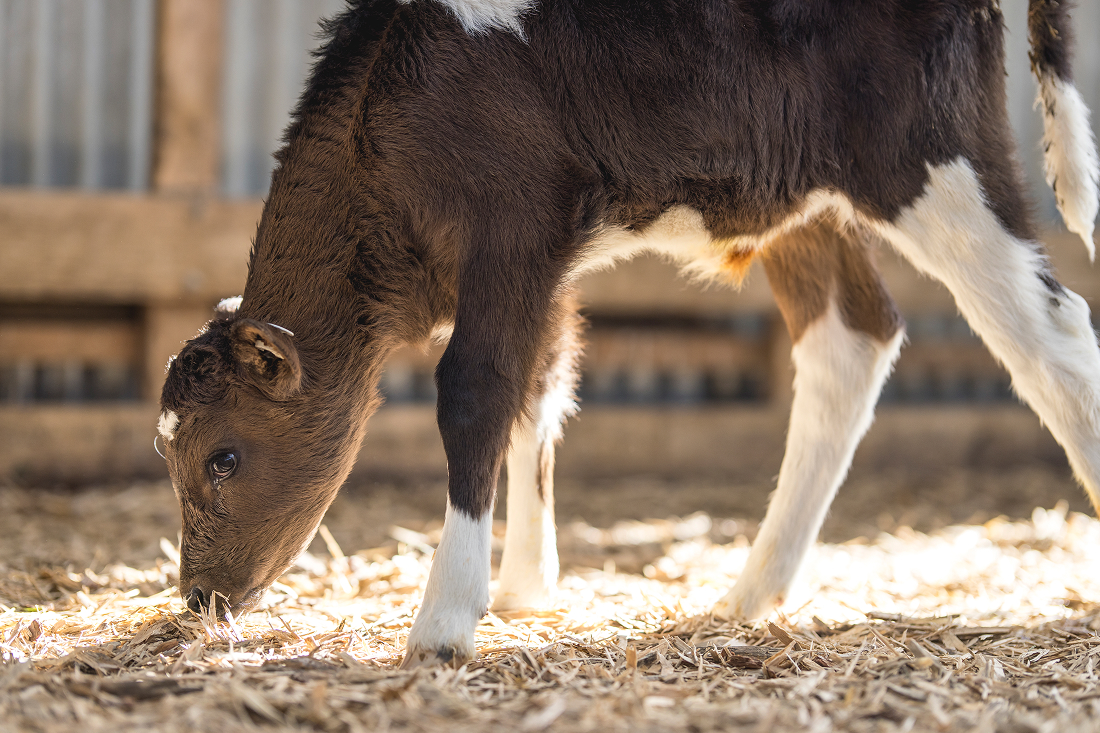
Start with the shed
Clean, dry and well-ventilated housing is critical. Remove old bedding, disinfect surfaces and check drainage and airflow. Avoid drafts at calf height while maintaining fresh air movement. Good housing reduces disease risk and allows calves to put energy into growth. Make sure there is enough space per calf and that bedding can be kept clean and dry throughout the season. If you plan to use calf coats, check you have enough on hand and ready for early-season calves or cold snaps.
Get feeding systems ready
Before calving begins, it’s worth checking feeders, teats and buckets are clean and fit for purpose, with enough gear for peak numbers. If you’re using milk replacer or calf meal, sourcing it early can avoid supply pressure later. Consistent feeding — timing, temperature and mix — supports steady growth and calf health.
Have key supplies on hand
Check you’ve got essential calf rearing supplies ready to go. This includes electrolytes, iodine for navels, calf covers, tagging gear and basic animal health products. Having everything on hand avoids last-minute scrambling and keeps your system running smoothly when numbers build.