Here you’ll find a short overview of Fonterra’s Organic Programme and what it offers farmers considering organic milk production.
Our Organic Milk programme offers farmers the opportunity to be part of a growing, long‑term organic supply chain, supporting strong returns and market certainty as global demand for organic dairy continues to build.
Established in 2002, Fonterra now has over 100 organic farms supplying over 10 million kgMS annually. Your Co-op provides the scale, capability, and market access to maximise the value of your organic milk.
per kgMS
as at September 2025
per kgMS with a range of $13.05 - $13.65 as at February 2026
To receive the Organic Milk Price, farms must:
Certification process
Support during transition
Your Co-op is with you throughout the journey.
Organics is also referred to as biological, ecological or regenerative farming. An organic farming system is one that aims to work with natural biological cycles. Organic management recognises that, in any system, every element affects every other element and no one component can be changed or taken out of the system without affecting other components.
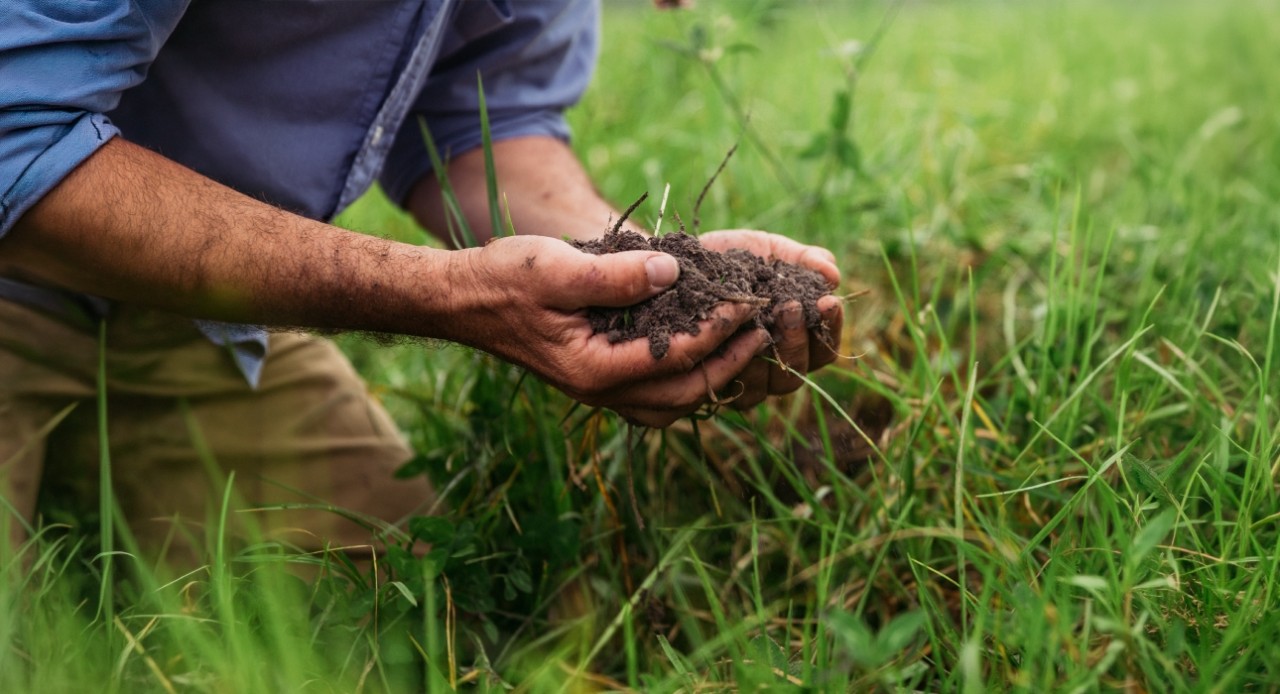
Organic management has a particular focus on optimal soil health and management. The soil is regarded as a living system on the basis that there is an essential link between creating healthy soils and healthy plants, animals and people. Fundamentally, organic management requires farmers to act proactively rather than reactively.
Organic management is based on a management system which aims to reduce or eliminate the need for most agricultural chemicals. Organic food is produced without the routine use of synthetic chemicals such as fungicides, herbicides, insecticides, growth regulators and soluble fertilisers.
But it is much more than “spray-free” or “residue-free”.
Organic farmers concentrate primarily on adjustments within the farm and farming system, in particular rotations using appropriate soil fertility management and cultivations, to achieve targeted production levels amd minimise the use of external inputs.
There are quite a few misconceptions about the principles of organic farming. Some of the more common misconceptions are discussed below.
We can support you on your journey to becoming a certified organic farmer by working alongside you and your chosen certification body. Initially you will register with one of the two organic certification bodies in New Zealand that work with our farmers: AsureQuality or BioGro. Your certification body will guide and support you on your whole conversion and certification journey through annual audits, online tools and technical services.
The basis of organic certification is completing and maintaining an organic management plan which aligns the organic rules and how you farm under these rules. Your OMP (Organic Management Plan) also lists your pre-approved inputs for your land applications, animal treatments and any products you wish to use supporting your farming operation whilst maintaining your organic compliance
A few of the markets we require certification for, can be certified under the MPI Official Organic Assurance Programme (OOAP) undertaken through your chosen certification body (AsureQuality or BioGro) at your annual audit. On top of these markets, Fonterra requires certification to Korean organic requirements, the United States Department of Agriculture National Organic Programme (USDA NOP) and Canadian Organic Regulations (COR). This suite of certifications gives your milk the best access to markets around most of the world.
The time it takes to gain certification will depend on the farm system’s starting point and what inputs (fertiliser, chemicals) have been used in recent times. Generally, it takes three years to certify the land from last use of a non-certified input and 18 months for stock which can be achieved alongside your land conversion, meaning your farm could achieve full certification of land and animals within a 3-year period.
To understand where your farming system fits within a conversion timeline it is advised that you reach out to either AsureQuality or BioGro to request an on-farm assessment, this would provide you with a clear understanding and pathway to becoming a certified organic farm supplying your milk to the Fonterra organic program.
Organic milk price was introduced in the 2016/2017 season to ensure our organic farmers are paid a fair return for their organic milk, reflecting the market value it delivers.
In addition to receiving a market based return for milk sold as organic the organic milk price benefits from receiving the conventional farm gate milk price for any milk that can’t be processed or sold as organic.
The stability and strength of our organic program comes from the diverse portfolio of products and markets we operate in. The Co-op produces a range of organic milk products for distribution in New Zealand and internationally including fresh liquid milk, whole milk powder, skim milk powder, UHT drinking milk, butter, cheese, lactose, milk protein concentrate, and whey protein concentrate.
The organic milk charge ensures that we can pay farmers a fair market price for their organic milk and contribute to shared overheads, while ensuring the wider co-op receives a fair return on capital and the resources invested to deliver a premium return for organic milk.
The charge, set at 20% of organic sales revenue, is consistent with the gross margin for similar businesses, while allowing for the assets utilised and the added cost and complexity associated with organic segregation and management.
https://www.asurequality.com