Organic dairy farming is gaining momentum in New Zealand, with farmers like Michael and Merryn Ashton leading the way.
Article
Organic dairy farming is gaining momentum in New Zealand, with farmers like Michael and Merryn Ashton leading the way.
The Hawke’s Bay farmers’ approach is rooted in preventative planning, premium milk quality, and a deep respect for the land and animals. In this Q&A, Michael and Merryn share insights into their pasture management, milk quality practices, youngstock rearing, and the financial positives of running an organic dairy business.
Michael: I’m third generation, I’ve been dairy farming since I left school. We did 10 years on mum and dad’s organic farm, then went down South sharemilking conventionally for a few years, and then moved to Hawke’s Bay, we have been here for about 18 months now.
Merryn: The opportunity to enter an equity partnership came up and we leapt at it. For us, farming organic is a more natural way of farming and fits with what we’re passionate about.
Michael: We moved to an established organic farm in the Hawkeʼs Bay, milking 500 cows. Although it was converted to organic, there has been a fair bit of work to do to get the farm working for us. Our approach to organic farming is all about keeping things simple, focusing on animal health, and running a low-cost, high-margin system.
Merryn: We put a lot of emphasis on prevention, instead of the ambulance at the bottom of the cliff, we ask ourselves ‘what can we do to prevent things happening in the first place?’ By maintaining the health of the cow, we find we have less problems, and less stress. We monitor cows closely using wearables on the cows and sensors in the dairy. Virtual fencing is used for grazing management, this allows us to move cows as often as needed, to keep pastures healthy and cows well-fed. By keeping a close eye on our animals and pastures, we can address small issues before they become big problems, which means less stress and fewer interventions overall.
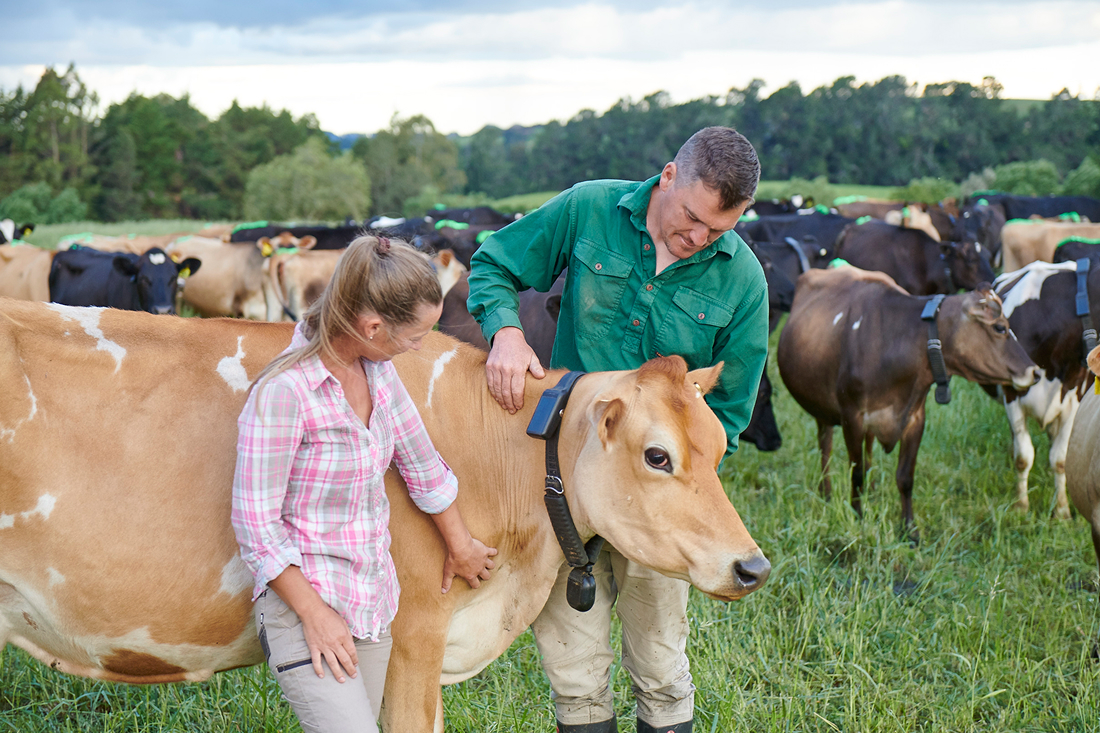
Michael: Organic pasture management practices on our farm are all about low cost, careful grazing, and encouraging diverse species. We run a low stocking rate – about two cows per hectare – which helps keep pasture quality up and reduces pressure on the land. We cut silage and baleage on-farm and use deferred grazing to bank feed for later in the season. As an example, last autumn we took 24 hectares out of rotation, then strip-grazed both herds through those paddocks when feed was short, and those areas are now performing better than the rest of the farm. This approach lets us shift feed, improve pastures, and keep costs down.
Merryn: We monitor pasture day-to-day, using virtual fencing to manage breaks and keep cows moving at their own pace. We don’t rely on off-farm feed, and our system is designed to use what we have.
Michael: We also focus on pasture diversity, especially encouraging red clover and lucerne for their deep roots and high protein. We do this mainly through grazing management, aiming for at least a 30-day round to allow full recovery and sunlight for new growth. We avoid regrassing or cropping, instead working to improve what’s already there by topping hard to let other species come through. We’ve got very light soils and are in a high wind area so if we cultivate and wind comes up there is potential to lose all the topsoil, we want to avoid that.
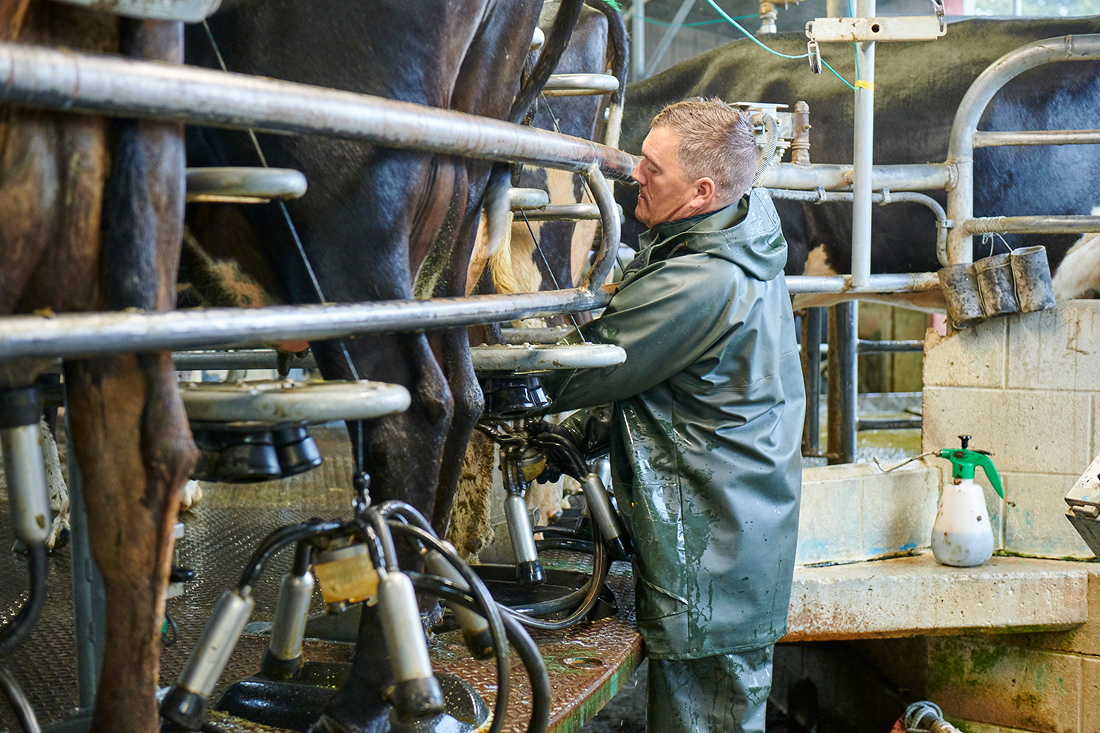
Michael: Milk quality, for us, means keeping our somatic cell count low, producing clean, healthy milk, and looking after our animals. Milking once-a-day allows us to run the shed slower to watch for any issues and keep hygiene standards high. We always wear gloves, keep the shed, ourselves, and the cows clean including trimming tails regularly. We have automatic teat spraying to reduce risk of infection.
We know if we keep somatic cell counts down, we’re going to be looking after our animals. By monitoring each individual cow’s milking with sensors, we can see where each cow is at and this helps us reduce risk of infection – we milk high cell count cows last so they’re not spreading bugs to the rest of the herd. Information gathered also tracks how each cow is performing, – this data is then used to help us build our strongest future herd – we breed replacements from the top 75%.
Michael: We manage reproduction by focusing on overall cow health, keeping stress low, and making sure the cows have good cow flow and calm routines. Last year, our repro rate was great – just a 4% empty rate with our main herd and a 91% six-week in-calf rate, so they’re getting in-calf easily.
The wearables allow the cows to move calmly and independently. It takes away that variable of staff moving them and putting too much pressure on them. You take away the vehicles, people and dogs – then cows are actually moving themselves, at their preferred pace, and it’s made a huge impact. We also split herds by age to reduce bullying and stress.
Body condition scoring is one of the tools we use for making drying-off decisions on our farm. We score the herd at the end of February to get a clear idea of where each cow is at, making sure everything’s on track.
Drying-off decisions are then based on body condition score, production, and somatic cell count. Sometimes we’ll start in March, depending on what the cows are doing and what our pasture covers look like. If we’re short of feed, we dry off early; if there’s plenty, we keep milking. It gives us flexibility with the length of our season, rather than being tied to a specific start date.
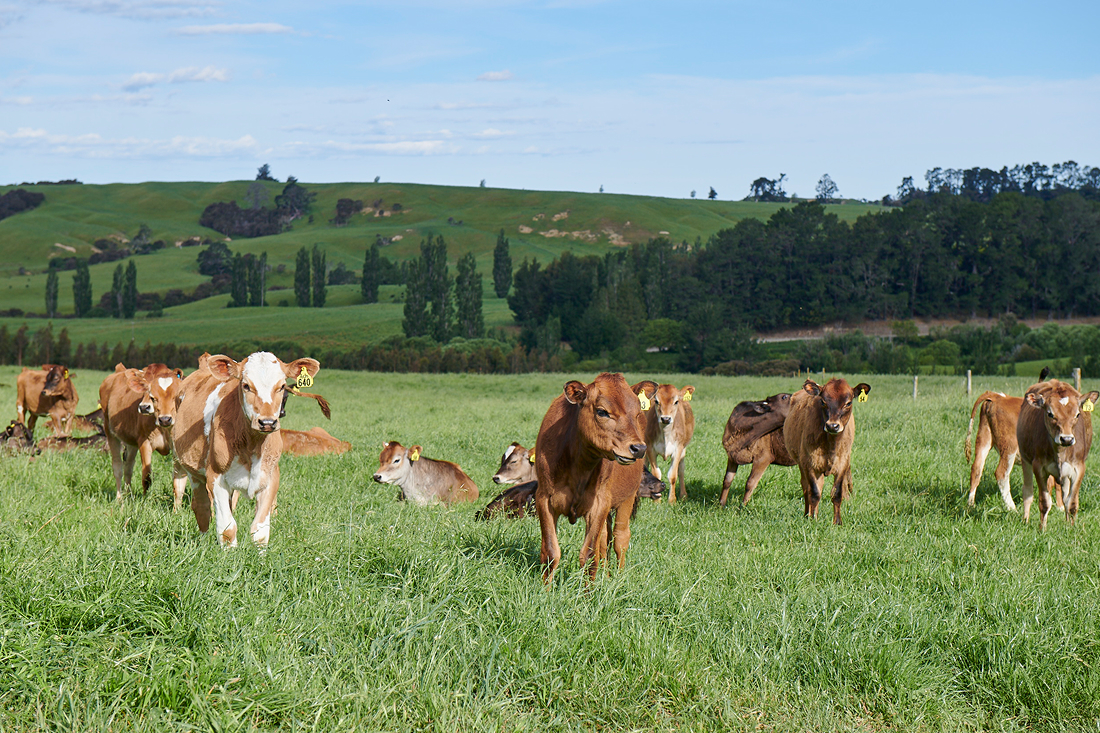
Merryn: Raising youngstock organically is just a more natural approach for us. I find that when we wean our calves they just carry on growing, which is a real difference from systems where you feed a lot of milk to get them to a weight, then suddenly stop. Instead, ours stay on milk until they are 120-140kg (how much depends on age), organic hay and grass, and we make sure they get onto pasture early so they’re robust by the time we do wean them.
We don’t use grain, just what we grow, and support their immune systems with things like probiotics, loose-lick minerals, and cider vinegar – there’s a lot you can give them to help them develop well. If health challenges pop up, like rotavirus or coccidiosis, we do what’s permitted in the organic framework – we can vaccinate for rotavirus. Organic is not as limiting as people think – we can still use electrolytes, most vaccines (like 7-in-1 and lepto) and a lot of tools from the conventional system if needed, but good observation and natural support gets us most of the way there.
Merryn: Profitability matters more than high production. When you remove the pressure and lower costs, our business remains highly profitable. We’ve focused on animal health and let go of production-driven mindsets, which has led to better returns and improved our quality of life.
Michael: Even in seasons when our herd numbers grow and we cull less, we’re still achieving strong financial results and milk quality is high. Organic farming works – reducing stress, boosting profitability, and making sense for our business and land.
Michael: It’s definitely doable and not as limiting as you might think – drop your costs, simplify your system, and you’ll find farming more enjoyable and profitable.
Merryn: Prioritise prevention over intervention, look after your young stock, and remember you don’t need high production to be highly profitable.
For more information visit nzfarmsource.com/organicmilk or email specialty.milks@fonterra.com.