The Co-op’s move to a regional model has made a big change to the way we work, for the better. Every region has its own challenges and it’s great to have local knowledge to make informed decisions on-farm. We’ve had really positive feedback on the new model with farmers really appreciating the genuine leadership from Co-op staff in the regions.
On a day-to-day level, you never know what will pop up. I’ve learnt to always have an open mind, take the time to learn the background and context of a situation, and get feedback.
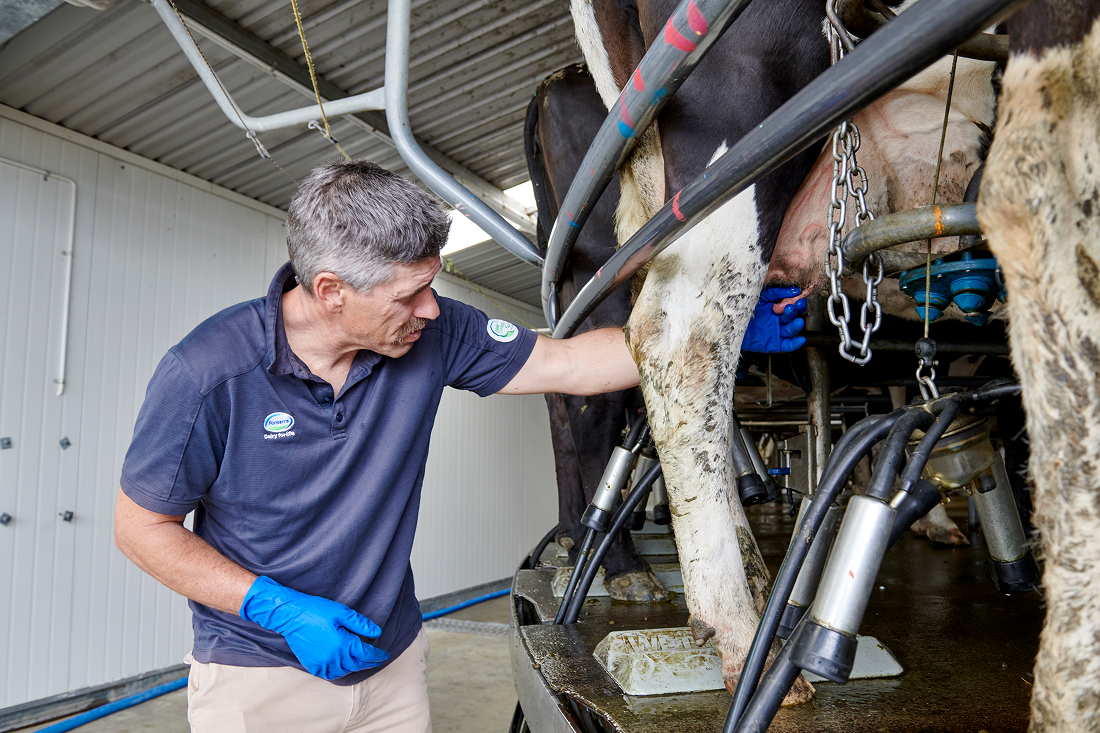
Animal welfare is a big part of the milk quality team’s role. It’s so intrinsically tied into the Co-op’s reputational risk and it’s an issue that we work really closely with farmers on. We’re working with farmers at all levels and have good processes that are consistently applied. We’re able to help farmers achieve The Co-operative Difference and improve their practices on-farm to be more efficient and productive. We also work closely with farmers at the other end who may have poor animal welfare practices. In a situation where we find skinny cows with body condition scores below 3.5, we’ll work with the farmer and provide a clear directive and actions to take, and demonstrate the consequences of failing to meet the Co-op’s terms and conditions.
Over the years I’ve become a subject matter expert in milk quality and modified farm assessments. I’ve been involved in the evolution of the Co-op’s farm dairy assessments and training staff nationwide. I love the ability to work with farmers and Farm Source colleagues to share knowledge and make improvements. It’s all about saving compliance time.
No other dairy company in New Zealand has the level of technical expertise available to its farmers that the Co-op has. It’s a real point of difference that our farmers are able to access.
If you would like to improve your farm’s milk production and quality, get in touch with your local milk quality advisor or book in for a milk quality service visit.